
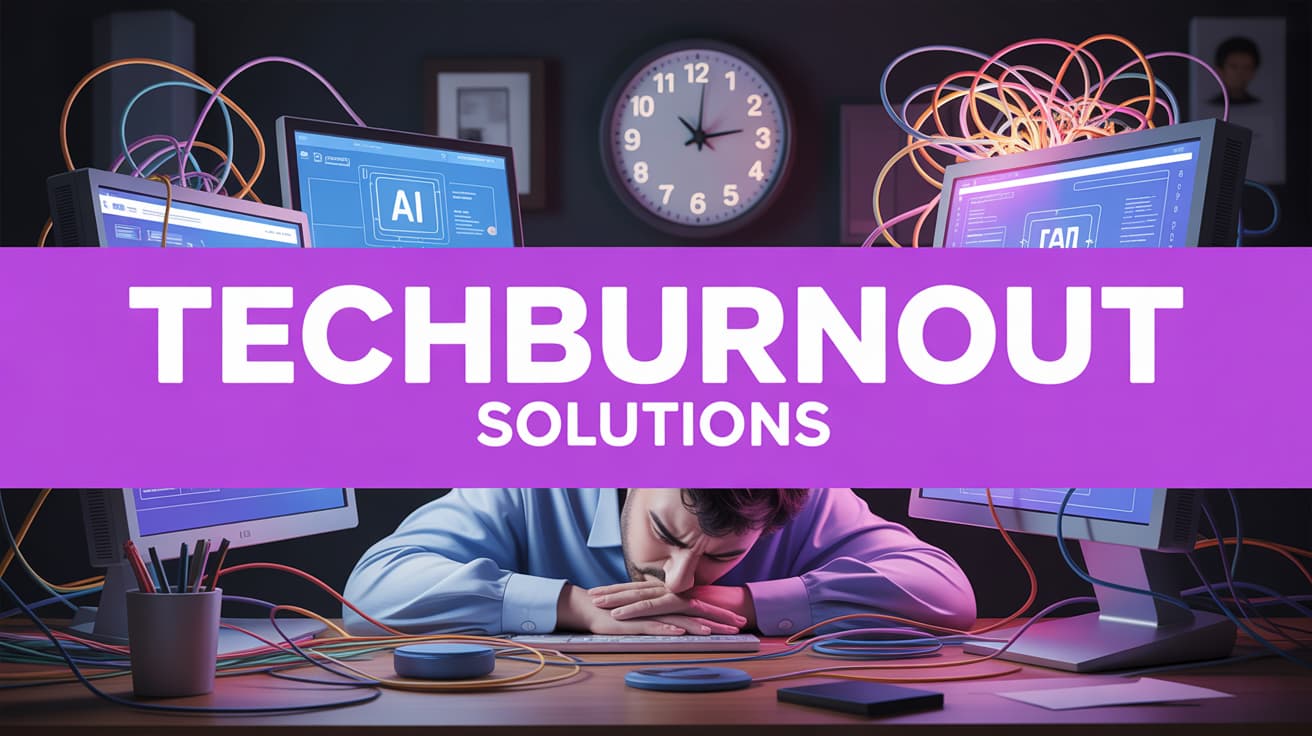
The promise that became a burden
We were sold a dream. Artificial intelligence was supposed to be our co-pilot, the tireless assistant that would handle the mundane, freeing up our human creativity for high-level strategy and groundbreaking campaigns. The promise was less grind, more glory. The reality? A nightmare of digital exhaustion. The marketing industry is facing a burnout epidemic, and contrary to all expectations, AI is fanning the flames. The statistics are not just numbers; they are a cry for help from an industry at its breaking point. A staggering 71% of marketers admit to feeling burnt out. Let that sink in. Nearly three-quarters of the creative minds driving our economy are running on empty. Worse, 66% expect their stress levels to escalate. This isn't a temporary slump. It's a systemic failure. The promised technological revolution has failed to materialize, leaving a trail of exhausted professionals in its wake. 😩
The roots of our discontent
The core reasons for this crisis are painfully familiar: an excessive workload, a breakdown in communication, and a frustrating lack of resources. These are the classic ingredients for professional burnout. Marketers are drowning in tasks, and the life raft we were thrown—AI—has turned out to be an anchor. More than half of UK marketing professionals, 53% to be exact, are now working at least five hours of overtime every single week. That's an extra month of work per year, unpaid and unappreciated. This isn't sustainable. It's a high-speed train to a collective breakdown. We are pushing our best talent to the edge, all while clinging to the false hope that a new algorithm or platform will magically solve deep-rooted structural problems. It won't. The problem isn't the desire for innovation; it's the blind faith in technology as a panacea for flawed processes and unrealistic expectations.
How AI became the new micromanagement
Instead of liberating teams, AI has introduced a new, insidious layer of tedious work. The focus has shifted from creating to managing the machine. The promised efficiency is a mirage, obscured by the fog of new, unforeseen tasks. Teams are now bogged down in writing painstakingly detailed, AI-friendly briefs, a skill in itself that requires time and training. Then comes the endless cycle of double-checking outputs. AI doesn't understand nuance, brand voice, or the subtle context of a long-standing client relationship. So, humans must meticulously review every line, every image, and every data point it generates. The original work hasn't been removed; it has been augmented with the frustrating task of correcting a machine's generic, often soulless, attempts at creativity. We’ve simply traded one set of repetitive tasks for another, more complex and mentally taxing set. This is not progress; it is a lateral move into a different kind of drudgery. 🤖
The ever-expanding AI workload
The burden of this new AI-driven workflow is immense and multifaceted. It begins with the need to learn constantly changing tools. Marketers, already stretched thin, must now become perpetual students of a volatile tech landscape where platforms and features change weekly. This is followed by the soul-crushing task of quality-checking. The AI might generate a blog post in seconds, but a human must spend an hour verifying its claims, correcting its tone, and ensuring it doesn't sound like every other piece of AI-generated content flooding the internet. This leads directly to rewriting generic content. The initial draft is fast, but making it original, compelling, and aligned with a specific brand identity requires significant human effort, often negating the initial time savings. Then there's the challenge of managing client expectations, explaining why a task that seems automated still requires a significant budget for human oversight and refinement. And finally, marketers find themselves in the bizarre position of defending their work. When a great idea is produced, they face the cynical question, "Did you just use AI for that?" It devalues human expertise and adds a layer of defensive posturing to the creative process. This isn't a workload reduction; it's a workload transformation into something more complex and less rewarding.
The devastating human cost
This relentless pressure and the failure of AI to deliver on its promises are exacting a heavy human toll. The marketing industry is fundamentally out of sync with the needs of its people. Professionals are trying to juggle the new demands of a global, 24-hour business cycle with their personal lives, and the system is failing them. The consequences are stark and damaging. High turnover rates have become the norm as talented individuals flee the industry in search of a sustainable career path. This constant churn destabilizes teams, erodes institutional knowledge, and ultimately damages client relationships, who crave consistency and expertise. The quality of work inevitably declines when the workforce is exhausted and demoralized. Creativity, the very lifeblood of marketing, is the first casualty of burnout. It’s impossible to innovate when you're just trying to survive the week. This leads to a cascade of mental health issues, as stress, anxiety, and depression become rampant. The human cost is not an abstract concept; it's visible in the faces of our colleagues and the quality of the work we produce. 💔
A path forward: breaking the burnout cycle
We are at a critical juncture. Continuing down this path is not an option. We must actively break the burnout cycle, and it starts with a pragmatic and human-centric approach to technology. The most successful agencies are already leading the way, and their strategies are not revolutionary, but they are effective. It begins with setting realistic expectations about AI's capabilities. AI is a tool, not a strategist. It can augment, but it cannot replace human insight, empathy, and creativity. We must stop pretending it can solve all our problems and start using it for what it's good at. This requires a fundamental shift in mindset from agency leaders down to junior staff. We need to treat AI as a powerful but limited assistant, not a magic wand.
Invest in people, not just platforms
One of the biggest mistakes has been throwing new AI tools at teams without a plan. True success requires a significant investment in proper training *before* implementation. This means more than just a one-hour webinar. It involves deep, hands-on training that teaches teams not just how to use a tool, but when and why to use it. It means helping them understand the limitations, the potential pitfalls, and the best practices for integrating AI into their workflow without adding to their burden. When people feel competent and confident with the tools they are given, their stress decreases and their effectiveness increases. Rushing implementation without proper training is a recipe for frustration and failure. It creates more work and anxiety as employees are left to figure things out on their own, often leading to misuse of the technology and subpar results. Prioritizing people's skills and confidence is the only way to unlock the true potential of any technology. 💡
Reclaiming our time and our minds
Technology has blurred the lines between work and life, and we must deliberately draw them again. Creating and enforcing firm boundaries around work hours is non-negotiable. The 24/7 nature of marketing is a myth that fuels burnout. Leaders must set the example by logging off, respecting evenings and weekends, and encouraging their teams to do the same. This also means building in dedicated recovery time. The creative process is not a factory assembly line; it requires periods of rest and mental space for ideas to percolate and develop. Expecting constant, high-level output without breaks is unrealistic and destructive. Recovery time isn't a luxury; it's an essential component of high-performance creative work. Agencies that build this into their culture will not only retain their best talent but will also produce better, more innovative work. It is time to champion the human need for rest as a strategic business advantage.
The art of smart automation
The final, crucial step is to be ruthlessly strategic about what we automate. The goal should be to automate genuinely repetitive, low-value tasks, not the creative and strategic work that gives marketing its value. Think scheduling social media posts, generating basic reports, or transcribing interviews. These are tasks where AI can provide real, tangible time savings without compromising quality. Attempting to automate brainstorming, brand strategy, or nuanced copywriting is a fool's errand. It leads to the generic, soulless content that we are all now fighting against. The key is to identify the real bottlenecks and points of friction in the workflow and apply automation there. Freeing up a marketer from an hour of data entry gives them an hour back for creative thinking. Forcing them to spend an hour rewriting a bland, AI-generated article is a net loss. Smart automation is about subtraction, not addition. It's about removing the drudgery to make space for the magic. ✨